Master Review
Read Ellen Tha Great's review of Master (2022), writer-director Mariama Diallo's psychological horror film starring Regina Hall, exploring its themes, performances, and lasting impact.
“Master,” the first feature film from writer-director Mariama Diallo, brings to cinematic life an unsettling yet honest account of Diallo’s internal experiences. Told through a horror lens, “Master” follows three Black women striving to find their place in a prestigious New England college built on the site of Salem-era Gallows Hill.
Gail Bishop (Regina Hall), just instated as “Master,” a dean of students, discovers what lies behind the school’s immaculate facade; first-year student Jasmine Moore (Zoe Renee) confronts a new home that is cold and unwelcoming; and literature professor Liv Beckman (Amber Gray) collides with colleagues who question her right to belong. Navigating politics and privilege, they encounter increasingly terrifying manifestations of the school’s haunted past… and present.
Diallo modeled the fictitious Ancaster college on the school she attended. A school that once used the term “Master,” which is associated with slavery and oppression, to address the head of a college. In a Sundance Q&A with Diallo, she stated: “part of the process of writing and making this film was asking some tough questions of myself; of how I was able to sustain four years of my life where I accepted this person into my life — at the very least with that title. What did it mean and why did it happen? Why didn’t I wake up?”
Woven into the film’s various narratives are themes of invisibility, alienation and loneliness felt by three very different yet connected characters trying to figure it out. Diallo’s skillful blend of tone, mood and Kafkaesque imagery conjure visceral, emotional and psychological responses. Painful as it is to watch (insert trigger warning here), one can’t help but wonder how painful it might’ve been for Regina Hall, Zoe Renee and Amber Gray to place themselves into the roles of Gail, Jasmine and Liv. All three actors deliver captivating and palpable performances leaving it up to viewers to decide what the women are actually experiencing and what is antagonizing them.
Diallo’s storytelling deliberately focuses on the lived experience of microaggressions and inequality using history and social reality to reiterate how racism exists and operates at the core of its institutions. “It’s not ghosts, it’s not supernatural, it’s America. And it’s everywhere.”
The cinematic suspense is orchestrated skillfully through sound, close ups, objects, shadows and lighting, which all provide the right amount of tension and a well-timed relief in the third act. What may come across as an inconclusive story, due to some unresolved plot lines and unexplained mysteries, actually allows the viewer to choose what to think and believe. My takeaway, on the film’s lingering layers, was the correlation to America’s unresolved history of racism. “Master” is a compelling story driven by women and told with personal urgency.
“Master” made its world premiere at the 2022 Sundance Film Festival in the U.S. Dramatic Competition section.
Mariama Diallo is a Brooklyn-based writer-director. Previous work includes the short films Hair Wolf (Sundance 2018) and White Devil (TIFF 2021), as well as HBO’s Random Acts of Flyness. She has been featured in Variety’s 10 Directors to Watch and Filmmaker magazine’s 25 New Faces of Independent Film.
Director – screenwriter: Mariama Diallo
Producers: Joshua Astrachan, Brad Becker-Parton, Andrea Roa
Executive Producers: Regina Hall, Mariama Diallo, Sophia Lin, Terence Nance
Director of Photography: Charlotte Hornsby
Cast: Regina Hall, Zoe Renee, Talia Ryder, Talia Balsam, Amber Gray
Director of photography: Charlotte Hornsby
Production designer: Tommy Love, Meredith Lippincott
Costume designer: Mirren Gordon-Crozier
Editors: Jennifer Lee, Maya Maffioli
Music: Robert Aiki Aubrey Lowe
Casting director: Jessica Daniels, Daniel Frankel

Regina Hall | Master
God’s Country Review
Read Ellen Tha Great's review of God's Country, starring Thandiwe Newton, exploring grief, resilience, power, and the psychological tension that drives Julian Higgins' feature debut.
There’s a tone in Julian Higgins’ feature debut, “God’s Country,” that succinctly captures the essence of the film’s narrative in a way that alters how and what we think about survival. It’s dark, heavy, delicate, honest and extreme.
Sandra (Thandiwe Newton) is very tired. It’s been years of trying (and failing) to please her recently deceased mother, while also navigating the challenging politics and power dynamics at the college where she teaches. And then there is the racism, sexism, and toxic masculinity she encounters wherever she goes. But it’s a confrontation with two hunters trespassing on her property that ultimately tests Sandra’s self-restraint, pushing her grief and mounting anger to their limits. God’s Country examines one woman’s grieving process and determination to be taken seriously amid her refusal to surrender to the confines of society.
“God’s Country” is based on a short story (Winter Light) by bestselling Montana author, James Lee Burke. In his version, the main character is an older white man. In “God’s Country,” the POV perspective gets flipped when the main character is changed to a black woman in her 40s — living in western Montana.
Sandra (named after Sandra Bland) experiences a myriad of emotions but doesn’t do a lot of talking, instead, she expresses most of how and what she feels through action, movement, body language, eyes, and facial expressions. This, along with Higgin’s use of Montana’s sparsely populated landscape and snow-capped mountains, inform and lift the visual narrative to an authentic height. Newton delivers a noteworthy performance as Sandra — a brave, admirable, poised and bold character that she embodies elegantly.
The beauty in “God’s Country” juxtaposed against the ugliness of the antagonists is poetic and symbolic of the world we live in today; and silence, which is used as a powerful and nuanced communicative tool in the film, creates a pivotal space for this connection. What transpires in “God’s Country” is an unforeseen emotional experience that calls into question one’s moral code and what we think about our ethics. Co-written by Shaye Ogbonna and Higgins, the modern day western packs enormous grit and gusto— making it a stand-out film at this year’s Sundance festival.
Julian Higgins is a Los Angeles–based writer and director. His short films have screened around the globe and won dozens of prizes, including the gold medal Student Academy Award, two Student Emmy Awards, and the grand prize for Canon and Ron Howard’s Project Imaginat10n contest. His most recent short, Winter Light, was a top 10 finalist for the Academy Award.
Director: Julian Higgins
Screenwriter: Shaye Ogbonna, Julian Higgins
Producer: Miranda Bailey, Halee Bernard, Julian Higgins, Amanda Marshall
Executive Producer: Jason Beck, Anthony Ciardelli
Casting: Mark Bennett
Cinematography: Andrew Wheeler
Editor: Justin Laforge
Music: DeAndre James Allen-Toole
Principal Cast: Thandiwe Newton, Jeremy Bobb, Joris Jarsky, Jefferson White, Kai Lennox, Tanaya Beatty

Thandiwe Newton | God’s Country
Nanny Review
Read Ellen Tha Great's review of Nanny, writer-director Nikyatu Jusu's acclaimed feature debut, exploring visual storytelling, motherhood, immigration, identity, and the film's haunting emotional depth.
Aisha (Anna Diop) is a captivating protagonist with a quiet force and a mighty presence — an energy instantly recognized at the start of “Nanny” when the camera zooms in on Aisha’s sleeping face (a majestic display of skin tone juxtaposed against a white background); a spider crawls on the left side of her cheek and she wakes up startled.
Aisha, an undocumented Senegalese immigrant, lands a job as a nanny of a wealthy Manhattan couple. While she easily wins the affection of their young daughter Rose (Rose Decker), she becomes a pawn in the couple’s facade of a marriage. Amy (Michelle Monaghan), the mother, is as controlling as the dad (Morgan Spector) is disillusioned and woke. Haunted by the absence of the young son she left behind in Senegal, Aisha hopes her new job will afford her the chance to bring him to the U.S. and share in the life she is piecing together. But as his arrival approaches, a supernatural presence begins to invade both her dreams and her reality.
The line of demarcation between Aisha and Amy is defined early on, but it doesn’t take long for boundaries to be challenged by the latter’s audacity and privilege. It is within this complex space that the impetus of the film becomes clear: both women are sacrificing and surviving under distinguishable circumstances.
Writer-director Nikyatu Jusu’s personal connection to the story comes alive not only in the narrative but also in the visual language. Brilliantly conveyed are the colors, textures, shadows and depth used to set the tone in Aisha’s layered world, which is diametrically opposed to Amy’s. They tell their own story, which contributes to heightening the viewer’s senses.
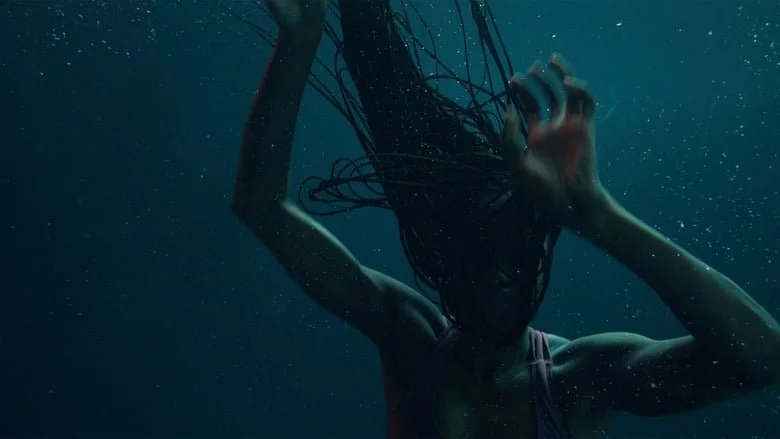
Just as stunning are the supernatural-horror elements from West African folktales that help guide Aisha into herself: Anansi the Spider, a character associated with skill and wisdom who triumphs over larger and more powerful adversaries; Mami Wata (Mother Water), a water spirit depicted as a mermaid that embodies sexuality, money and fertility. The element of water is perhaps the most symbolic in “Nanny” and is eloquently utilized to sway the plot into two interconnecting thresholds: the present and past. All three play an integral role in moving the film forward.
The one reprieve from Aisha’s ambivalent reality is Malik (Sinqua Walls), the handsome and endearing doorman whose introduction alludes to a hopeful future. The two embark on a picturesque romance worthy of its own feature film (ala ‘Really Love’ by Angel Kristi Williams). Aisha’s viewpoint shifts when she meets Malik’s grandmother Kathleen (Leslie Uggams), a clairvoyant, for the first time. Kathleen offers Aisha a trio of healing teas to choose from (ginger, hibiscus, turmeric) before sensing that something is awry in her life and asks, “How do you use your rage?” “Is it your superpower or your Kryptonite?”
At the heart of “Nanny” is a story about womanhood and parenthood all of which invite introspection from marginalized characters in the lives of women with more money, resources and access. Nikyatu Jusu’s ambient feature debut sheds a vibrant and poignant light on a rarely scene perspective of undocumented immigrants who work in America to support their families back home.
“Nanny is a dark but hopeful love letter for mothers who have been systematically excluded from the American dream.” ~ Nikyatu Jasu
Writer-director Nikyatu Jusu’s short film Suicide By Sunlight, a TFI/Chanel Through Her Lens grant recipient, premiered at Sundance in 2019. Nanny, her feature debut, was selected for the 2019 IFP Project Forum, the 2020 Sundance Directors and Screenwriters Labs and Creative Capital Award, and made the Black List. Jusu is also an assistant professor teaching fiction directing and screenwriting.
Director – screenwriter: Nikyatu Jusu
Producer: Nikkia Moulterie, Daniela Taplin Lundberg
Executive Producer: Ryan Heller, Sumalee Montano, Grace Lay, Rebecca Cammarata, Nikyatu Jusu
Casting Director: Kim Coleman
Assistant Director: Kate Branom
Cinematographer: Rina Yang
Production Designer: Jonathan Guggenheim
Costume Designer: Charlese Antoinette
Post-Production Supervisor: Isabel Henderson
Editor: Robert Mead
Composer: Tanerélle, Bartek Gliniak
Principal Cast: Anna Diop, Michelle Monaghan, Sinqua Walls, Morgan Spector, Rose Decker, Leslie Uggams
Anna Diop | Nanny
Passing Review
Read Ellen Tha Great's review of Passing, Rebecca Hall's adaptation of Nella Larsen's acclaimed novel, exploring identity, race, desire, and the remarkable performances of Tessa Thompson and Ruth Negga.
Rebecca Hall’s adaptation of “Passing” displays a stylistic sophistication and maintains a heightened emotional consistence that leaves the viewer breathless and yearning for more. The film, based on Nella Larsen’s acclaimed 1929 Harlem Renaissance novel, takes place in 1920s New York and tells the story of two Black women —Clare Kendry and Irene Redfield— who reunite after years apart. Both can “pass” as white, but have been living on different sides of the color line.
Hall’s intimate connection to the material (her maternal grandfather was African American / white “passing”) and the genius decision to frame the film in the old Hollywood standard 4:3 aspect ratio, informs its linear perspective in a way that draws the audience into Irene (Tessa Thompson) and Clare’s (Ruth Negga) personal space without feeling intrusive.
The viewer is meant to feel Irene’s discomfort, up close, when she occasionally dwells in her “passing” skin and repressed thoughts, or when she reveals her mood with a tense stare or head turn. The viewer is also meant to observe Clare’s disguised need to live out loud while relishing in her choice to do so unapologetically. These juxtaposed narratives are what makes “Passing” soar elegantly.
Tessa Thompson and Ruth Negga triumph as actors entrusted with delivering a quiet realization about who their characters truly are, while executing masterful performances that challenge what and how we think about color, identity, sexuality, envy, and obsession.
What stands out most about Rebecca Hall’s writing-directorial debut (in addition to the clever and concise use of light and sound to tell its own story), is the captivating analysis of the complexities that exist in female friendships. Hall’s brand of conceptualization leaves the viewer with their own ambivalent interpretations and ideas, which makes for a gorgeous and memorable cinematic experience.
Cast: Tessa Thompson, Ruth Negga, André Holland, Alexander Skarsgård, Bill Camp, Gbenga Akinnagbe, Antoinette Crowe-Legacy, Ashley Ware Jenkins
Director-screenwriter: Rebecca Hall, based on the novel by Nella Larsen
Producers: Nina Yang Bongiovi, Forest Whitaker, Margot Hand, Rebecca Hall
Executive producers: Oren Moverman, Angela Robinson, Erika Hampson, Michael Y. Chow, Kevin A. Lin, Ruth Negga, Tessa Thompson, Lauren Dark, Daniel Battsek, Ollie Madden, Brenda Robinson, Chaz Ebert, Yvonne Huff, Christopher Liu, Arcadiy Golubovich, Dori A. Rath, Joseph J. Restaino, David Gendron, Ali Jazayeri
Director of photography: Edu Grau
Production designer: Nora Mendis
Costume designer: Marci Rodgers
Music: Devonté Hynes
Editor: Sabine Hoffman
Visual effects supervisor: David Tecson
Casting: Laura Rosenthal, Kimberly Ostroy

Tessa Thompson, Ruth Negga | Passing
Tug of War Review
Read Ellen Tha Great's review of Tug of War, Amil Shivji's Swahili-language historical drama, exploring love, revolution, identity, and the rich culture and history of Zanzibar.
“Tug of War”(Vuta N’Kuvute) debuted in Toronto’s Discovery section and made history as the first Tanzanian feature film to ever play at the Toronto International Film Festival, and the first Tanzanian period drama to be made and adapted from Adam Shafi’s award-winning Swahili novel.
Set in colonial-era Zanzibar, “Tug of War” tells the story of Denge (Gudrun Columbus Mwanyika), a young Mswahili revolutionary fighting for a free Zanzibar and Yasmin (Ikhlas Gafur Vora), a recent runaway Indian-Zanzibari bride whose equal rebelliousness drives her to seek her own forbidden freedom.
Director Amil Shivji’s inspiration for the film was sparked when he first read Shafi’s novel in high school. “It’s not only been a long time, but a tough one. It took a lot to make this film. It’s never been done before,” Shivji says in the film’s opening remarks. The film is co-written with South African director Jenna Bass, who also debuted her latest feature, “Mlungu Wam” (Good Madam), in Toronto’s Platform section.
“Tug of War” is a contemporary piece told from the perspective of the oppressed and the resilient. Zanzibar in the 1950’s and 60’s was a time in history when the people were divided along social, racial and economic lines, creating a tug of war between race and culture. The film’s exploration of what life was like for Zanzibaris during an era when they lived under British colonial rule sheds a mainstream light on a part of history not known by many.
The film, told in Swahili with English subtitles, does well balancing a love and political period drama with a relevant narrative and an elegant aesthetic that portrays Zanzibar as its own main character. Even with its contentious history, the viewer is able to experience Zanzibar’s beautiful coastal culture through Shivji’s masterful choices of sound, color, music, and angles.
Denge and Yasmin undergo a memorable transformation in their struggle for independence against an oppressive country with Yasmin emerging as a strong and admirable female protagonist. Their chance meeting and forbidden romance reveals a gripping story of love, loyalty, freedom and revolution.
Cast: Ikhlas Gafur Vora, Gudrun Columbus Mwanyika, Siti Amina
Cinematography: Zenn van Zyl
Editing: Nadia Ben Rachid, Matthew Swanepoel
Executive Producers: Lucinda Englehart, Neil Tabatznik
Producers: Steven Markovitz, Amil Shivji
Production Companies: Big World Cinema, Kijiweni Productions, NiKo Film
Production Designers: Emilia Roux, Eliudi Dominic Mwanyika
Screenplay: Amil Shivji, Jenna Cato Bass
Sound: Frédéric Salles
Original Score: Amélie Legrand, Amine Bouhafa

Gudrun Columbus Mwanyika, Ikhlas Gafur Vora | Tug of War
Queen of Glory Review
Read Ellen Tha Great's review of Queen of Glory, Nana Mensah's feature directorial debut, exploring identity, family, grief, and cultural expectations through a heartfelt and witty coming-of-age dramedy.
‘Queen of Glory’, written and directed by Nana Mensah, premiered as part of the Tribeca 2021 Film Festival U.S. Narrative Competition section and Juneteenth programming.
SYNOPSIS: Brainy scientist Sarah, a doctoral student at Columbia University, is weeks away from following her very married boyfriend to Ohio when her mother dies suddenly, leaving Sarah the owner of a small but beloved Christian bookstore in the Bronx. Tasked with planning a culturally respectful funeral befitting the family matriarch, Sarah must juggle the expectations of her loving yet demanding family while navigating the reappearance of her estranged father all while grappling with what to do with the bookstore. Aided by an only-in-New York ensemble of Eastern European neighbors, feisty African aunties and a no-nonsense ex-con coworker, Sarah faces her new responsibilities while figuring out how to remain true to herself.
Nana Mensah’s feature directorial debut is a proverbial pilgrimage to self-discovery told through the lens of a girl-interrupted. Sarah, exceptionally portrayed by Nana Mensah (also known from her acting in “The Chair”, “The King of Staten Island”, “New Amsterdam”, “Stranger Things”), takes us on a poignant journey in this charming and original dramedy. Queen of Glory is enriched with cultural quirks, nuance, insight and dry humor — a brilliant reflection to Mensah’s personal storytelling and directing skills.
The film’s cast selection aligns beautifully with Mensah’s surprising purpose for each character. The most memorable being Meeko Gattuso. His involvement as the no-nonsense ex-con coworker (Pitt) is nothing short of genius. Gattuso’s character defies the stereotype often placed upon ex-convicts; and coupled with his role in the bookstore, it allows the viewer to experience Pitt beyond his external appearance. This is a huge nod to Gattuso’s acting chops.
While the story’s foundation is rooted in tragedy (a young woman losing her mother unexpectedly), the film reveals the universally relatable and festive inner workings of an immigrant family. Mensah’s respect and affection is felt in the authentic depiction of her Ghanaian-American community and Ghanaian history. The narrative of Sarah’s voyage — who she is pre-realization, the beautiful in-between, and Sarah fully realized — is, at its core, what makes Queen of Glory glow.
Nana Mensah is an actor, writer, and director. Her acting credits include Netflix’s BONDiNG, NBC’s New Amsterdam, and the forthcoming Netflix series The Chair starring Sandra Oh. She has written on shows for Amazon, HBO, and Netflix, as well as original pilots. Queen of Glory is her first film.
DIRECTOR: Nana Mensah
SCREENWRITER: Nana Mensah
PRODUCER: Jamund Washington, Kelley Robins Hicks, Baff Akoto, Nana Mensah, Anya Migdal
CINEMATOGRAPHER: Cybel Martin
EDITOR: Cooper Troxell
WITH: Nana Mensah, Meeko Gattuso, Oberon KA Adjepong, Adam Leon

Nana Mensah | Queen of Glory
Mark, Mary & Some Other People Review
Read Ellen Tha Great's review of Mark, Mary and Some Other People, Hannah Marks' romantic comedy exploring ethical non-monogamy, modern relationships, and the evolving conventions of the rom-com genre.
Mark, Mary and Some Other People, written and directed by Hannah Marks, made its world premiere in the U.S. Narrative Competition section in the 2021 Tribeca Film Festival. The film stars Ben Rosenfield, Hayley Law, Odessa A’Zion, Nik Dodani, Matt Shively, and Sofia Bryant.
Mark (Ben Rosenfield) and Mary’s (Hayley Law) meet-cute happens at a neighborhood drug store, where she is busy buying a pregnancy test, and he has to make an effort to remind her they met in college. After asking her out, he accompanies her as she takes the test, and upon it showing negative, she agrees to a date. One year later, they have fallen deeply, passionately, head over heels in love, and their whirlwind romance leads to marriage. So when Mary suddenly requests they open their relationship to “ethical non-monogamy”, Mark is taken by surprise, but agrees to try it. And that’s where this story really begins.
The film, which presents itself as an updated romantic-comedy (an ode to Gen-Z), is unpretentious in its perceptive and entertaining delivery. Mark, Mary and Some Other People, invites the viewer into observe two opposing sides of a polyamory tale. The premise challenges logic and emotion, but also creates a safe space for both to mutually exist. It’s a charming love story with imperfections and characters one can relate to and even side with, depending on your perspective. The chemistry between Mark and Mary is undeniable, which is a major nod to Ben Rosenfield and Hayley Law’s involvement and dedication to their roles.
While the film is specific to Mark and Mary’s relationship, it elicits modern thoughts and concepts in story-telling that go beyond socially sanctioned norms. Monogamy, for the most part, has been the prevalent ideal in rom-coms (“When Harry Met Sally”, “Hitch”, “Crazy Stupid Love”), which hasn’t always reflected new forms of relationships, until now.
Mark, Mary and Some Other People dares to explore what a polyamorous relationship could look like – from conception to conclusion – and from a funny, nuanced and honest lens. Hannah Marks’ writing deserves a shout out for its authentic curiosity, warm tone, relevant themes and perfectly placed ambiguity).
DIRECTOR: Hannah Marks
SCREENWRITER: Hannah Marks
PRODUCER: Hannah Marks, Pete Williams, Jon Lullo, Brendan Walter, Jonathan Duffy, Kelly Williams, Stephen Braun
CINEMATOGRAPHER: Casey Stolberg
EDITOR: Andy Holton
WITH: Ben Rosenfield, Hayley Law, Odessa A’Zion, Nik Dodani, Matt Shively, Sofia Bryant

Ben Rosenfield, Hayley Law | Mark, Mary and Some Other People
Night of the Kings Review
Read Ellen Tha Great's review of Night of the Kings, Philippe Lacôte's acclaimed drama exploring the power of storytelling, West African history, oral tradition, and life inside an Ivory Coast prison, starring Koné Bakary.
‘Night of the Kings’ is one of two films featured in this year’s Sundance ‘Spotlight’ category, a spot reserved for exceptional films which have already played elsewhere in the world. Directed and written by acclaimed French-Ivorian writer-director Philippe Lacôte, ‘Night of the Kings’ weaves the story of a young man (Koné Bakary) sent to “La Maca,” a prison in the middle of an Ivory Coast forest ruled by its inmates. His arrival aligns with the rising of the red moon, and at the behest of the institution’s ailing leader, he is appointed as the new “Roman” and in order to survive, must compel the other prisoners with his mystical storytelling— until sunrise.
In the only prison in the world run by an inmate and governed by its own laws, codes and beliefs, the reimagined “La Maca” serves as a captivating backdrop to a story inspired by Philippe Lacôte’s intimate connection to the prison. During a Q&A, Lacôte shared that as a child, he traveled to “La Maca” once a week to visit his mother who was imprisoned for political reasons.
“La Maca is a very open prison and as a child/visitor, one could meet prisoners and talk to them. For me, it was like a kingdom with kings and queens and lackeys. I stored all those childhood memories and used them for this film,” said Lacôte.
Told in three periods – the present, past, and future— the film manages to balance authenticity and newness with real rituals, vivid imagery, rich history, and dignified early African traditions that proudly reflect life pre-colonization. Lacôte pays homage to theessence and beauty of West African culture by depicting a griot – a West African troubadour-historian whose role has traditionally been to preserve the genealogies, historical narratives, and oral traditions of their people.
To have never acted prior to being cast as the lead role, Koné Bakary, a 22-year-old linguistics student, shines as a young prisoner fighting to earn his keep. It doesn’t matter whether “Roman” (a title, not a name) is great at storytelling— he has a bewitching imagination and the instinctive ability to mesmerize, which speaks volumes about Bakary’s commitment to his art.
‘Night of the Kings’ is an enchanting tribute to the power of storytelling and does a masterful job at leaving the viewer with an altered awareness of the history of society, young people who struggle, and the grim reality of life inside West Africa’s most infamous prison.
Cast: Koné Bakary, Steve Tientcheu, Rasmane Ouedraogo, Issaka Sawadogo, Digbeu Jean Cyrille, Abdoul Karim Konate, Anzian Marcel, Laetitia Ky, Denis Lavant
Writer-Director: Philippe Lacote
Producers: Delphine Jaquet, Yanick Letourneau, Ernest Konan, Yoro Mbaye
Cinematography: Tobie Marier Robitaille
Production design: Samuel Teisseire
Costume design: Hanna Sjodin
Editing: Aube Foglia
Music: Olivier Alary
In French, Dyula, Ivorian Slang

Koné Bakary | Night of the Kings
On the Count of Three Review
Jerrod Carmichael’s delivery of deadpan drama is notable and so is his commitment to his character, Valentino Watson. Christopher Abbott is brilliant, and brings an endearing quality to his role as Kevin.
Jerrod Carmichael, one of the eight black filmmakers presenting feature-length films at Sundance 2021, kills in his directorial debut.
‘On the Count of Three’ examines friendship and death from a funny, nuanced and painfully honest lens. The delicate infusion of humor in an otherwise profoundly disturbing plot is commendable. How does one take a bomb apart without triggering an explosion? You call an expert, that’s how. The assertion that comedians are tortured souls serves itself well in this 84-minute dramatic film (credits included) about two friends who plot to shoot each other at the same time, in the alley of a strip club called– Good Time Charlie’s. It’s in this defining moment, when Val (Jerrod Carmichael) and Kevin (Christopher Abbott) engage in delusional yet persuasive dialogue, that the on-screen magic of a bond breakable only by death comes to life with subtle gravity.
Their plan takes an unexpected detour when Kevin backs out on the count of three and matter-of-factly says to Val, “you have to admit, it’s a lot to spring on someone at the last minute.” To which Val’s incredulous response is, “I didn’t know I had to send a save the date for a f****** double suicide.” Kevin convinces Val to wait until the end of the day and Val reluctantly agrees. The life-long friends decide to do something they’ve never done before with their “bonus” day, which takes them down a path of what they believe to be reconciliation but eventually leads to inevitable destruction.
Jerrod Carmichael’s delivery of deadpan drama is notable and so is his commitment to his character, Valentino Watson. Christopher Abbott is brilliant, and brings an endearing quality to his role as Kevin. Their characters couldn’t be any more different yet it’s those differences coupled with childhood trauma that bring them together. The real life friendship between Carmichael and Abbott most definitely informs their on-screen chemistry, which makes it fun to watch these two tortured souls make poor choices and decisions until the very end.
The power of pathos reflects beautifully in this dark comedy and leaves the audience with conflicting impulses that resonate in ways that may be difficult to articulate. There’s something very familiar about grimly satiric humor that makes it relatable, which is why ‘On the Count of Three’ is a stand-out film.
On the Count of Three played in the U.S. Dramatic category of the Sundance Film Festival. World Premiere.
Cast: Jerrod Carmichael, Christopher Abbott, Tiffany Haddish, JB Smoove, Lavell Crawford, Henry Winkler
Director: Jerrod Carmichael
Screenwriters: Ari Katcher, Ryan Welch
Producers: David Carrico, Adam Paulsen, Tom Werner, Jake Densen, Jerrod Carmichael, Ari Katcher, Jimmy Price
Director of photography: Marshall Adams
Production designer: Garren Dunbar
Costume designer: Jennifer Stroud
Editor: Tom Eagles
Composer: Owen Pallett
Casting directors: Marisol Roncali, Chelsea Bloch

Jerrod Carmichael, Christopher Abbott | On the Count of Three